Today, March 2nd, 2010, it reached 46 F (7 C) and after a brief mild spell, some of the glacier-like deep crust of icy snow receded, beginning to reveal bare ground and overwintered plants. I am always interested in testing claims that plants are evergreen and are able to withstand a tough New England winter. I snapped a few photos of plants I have grown for at least several years. I'll start out with some Epimedium species.
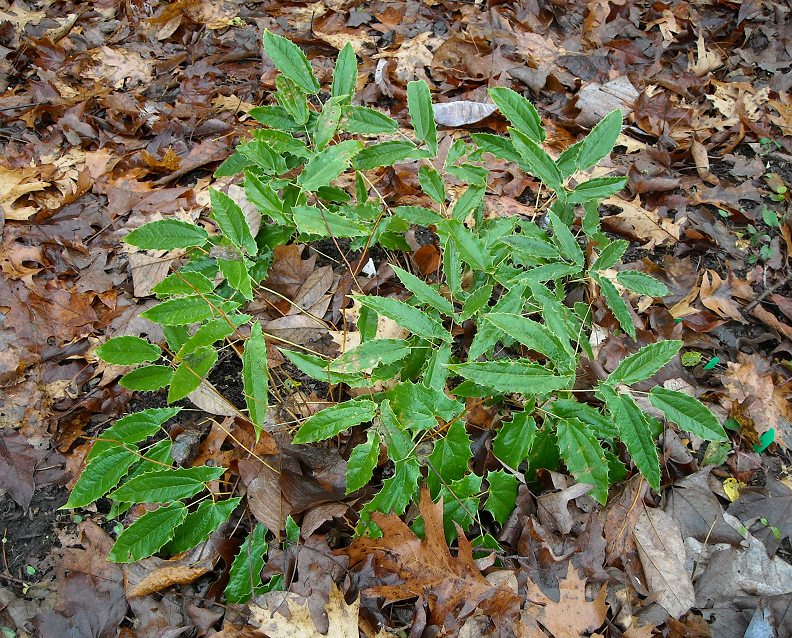
1. Epimedium wushanense "Spiny-leaved form" - with lustrous spiny leaves, Nov. 18, 2009.
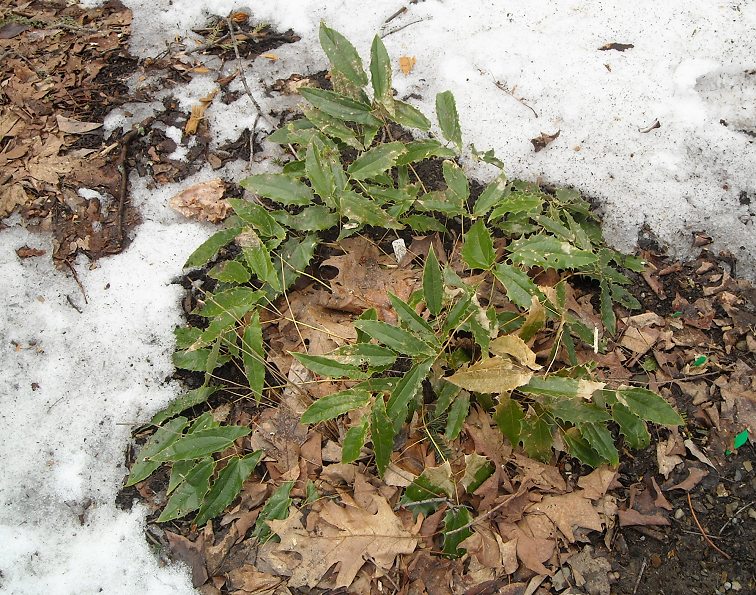
2. Epimedium wushanense "Spiny-leaved form" - came through like many "eppies", a bit tatty, but respectable. On the many evergreen Epimediums species, I make a judgement each spring whether to shear off all old foliage, or just tidy up a bit and snip away and of the dead or winter-burned leaves.
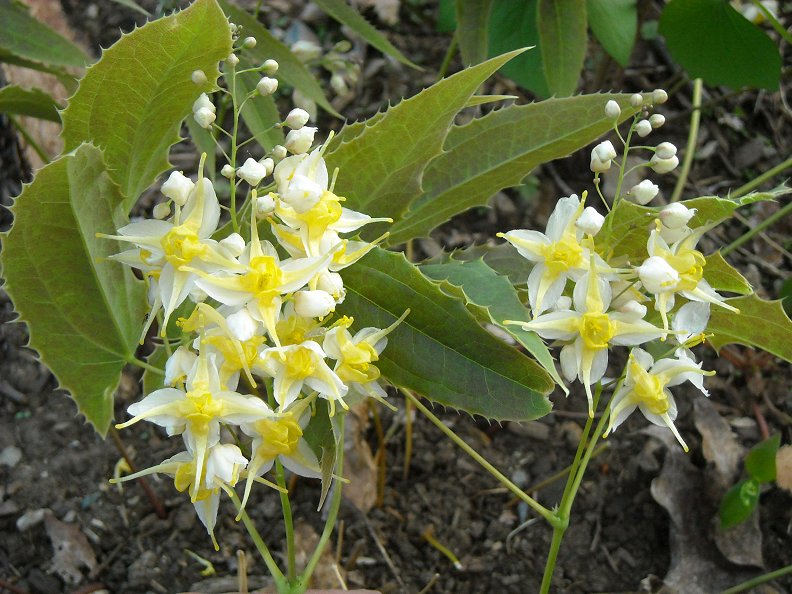
3. Epimedium wushanense "Spiny-leaved form" - beautiful flowers yet to come, photo from March 2009.
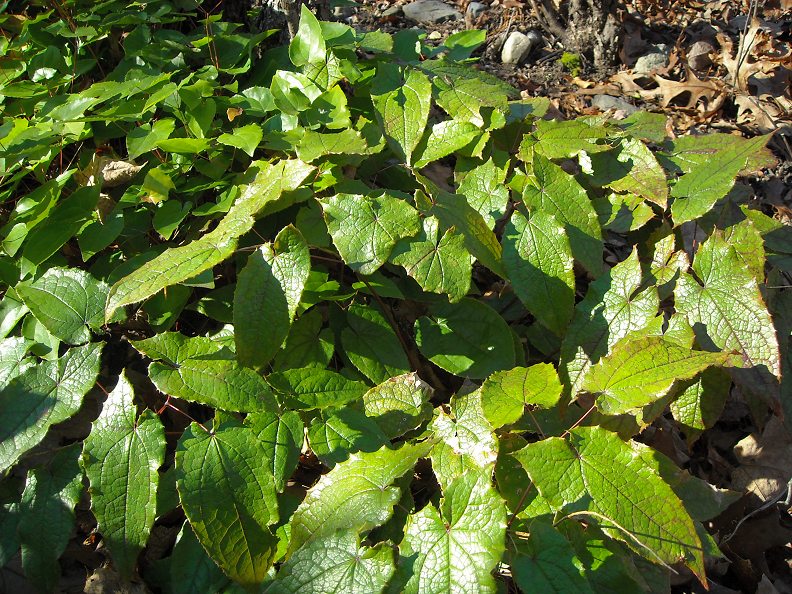
4. Epimedium lishichenii - bold, shiny, rugose, deeply veined leaves, Nov. 18, 2009.
5. Epimedium lishichenii - again looking a bit tatty today, but not bad. Most leaves will be left on.
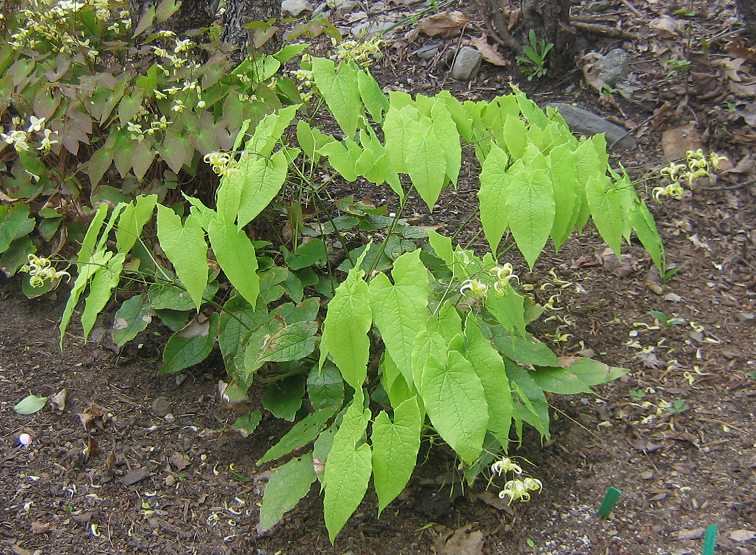
6. Epimedium lishichenii - in April-May, fresh lime-green rugose growth above old foliage, large yellow spidery flowers.
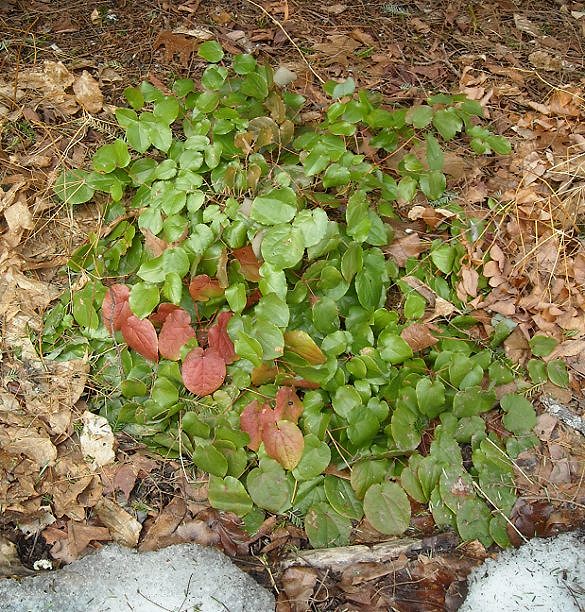
7. Epimedium pubigerum - taken today, the best looking and most winter tolerant of the epimediums, the foliage still in very good form.
8. Epimedium pubigerum - flowering on April 15th 2009 (tax day), in this photo one gets the 3-tier effect, with the older darker leaves at the base, a solid foundation for the new growth of lighter fresh green red-tinged foliage, topped with dainty heuchera-like sprays of small white flowers.
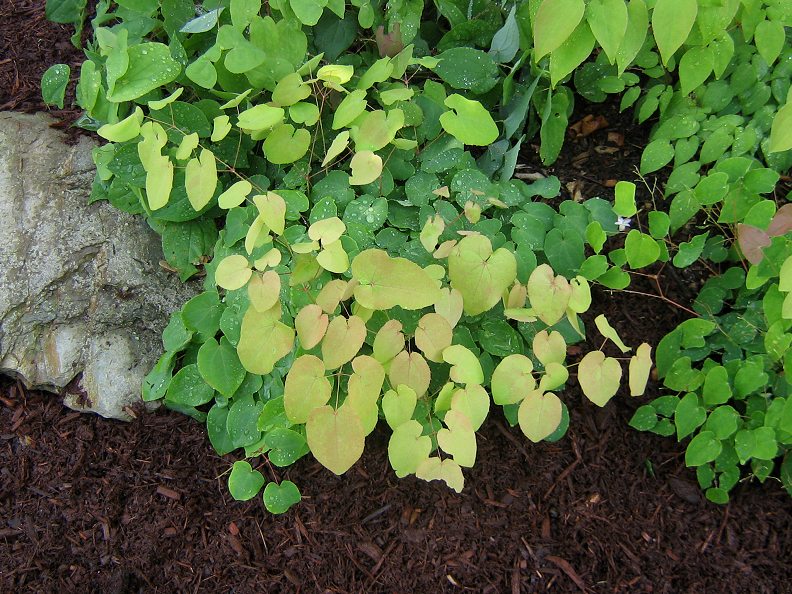
9. Epimedium pubigerum - like most "eppies", there is an ornamental second flush of foliage soon after flowering, with light color-suffused foliage overtopping the earlier, now darker green foliage.