
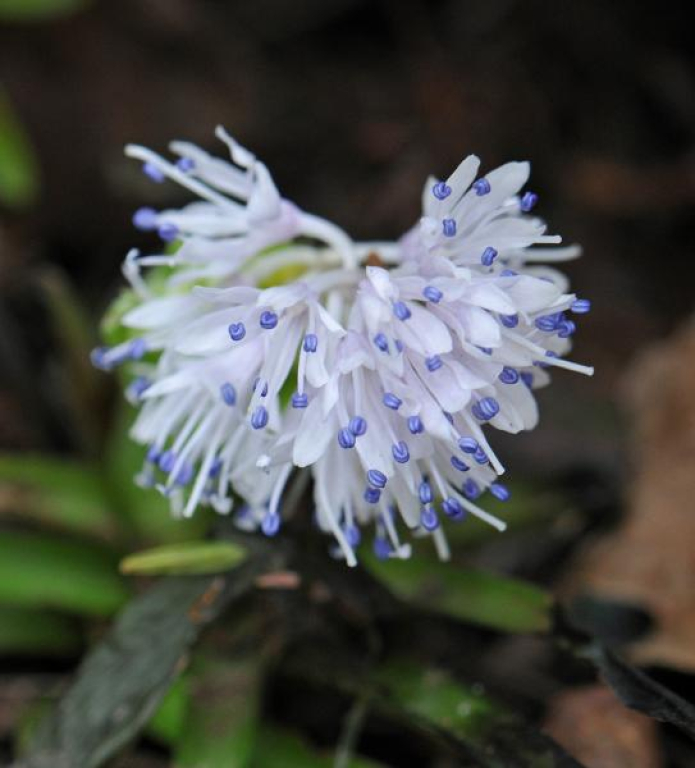
The genus Ypsilandra contains six species. Ypsilandra thibetica is perhaps the most well known of this relatively newly described genus. Hailing from SW China, this species is found on shaded, mossy slopes in forested areas. Plants produce an evergreen rosette of lance-shaped, lily-like leaves up to 15 cm long. Flowering starts in March in milder areas to as late as May in colder. The blossoms are held in a dense spike, 15 cm tall when they first start to open, but elongating 30-45 cm by the time they set seed. Individual six-petalled, nodding flowers are creamy white to pale ice-blue, with contrasting darker blue anthers. The flowers are highly fragrant, reminiscent of vanilla. Overall it appears similar to the better known Helionopsis orientalis, to which it is related.
March to May
Ypsilandra prefers organic-rich, evenly moist but well-drained soil in a shady situation. Zone 6.
Seed, division, leaf cuttings