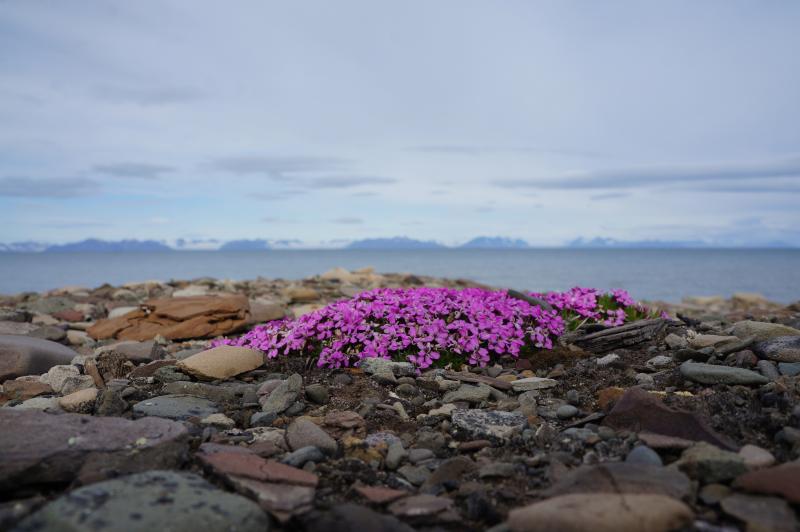
We were a group of 30 plant enthusiasts who went to Svalbard for a week in July to look for plats in the arctic archipelago. It is not more than about 200 different vascular plants there on the 40% not covered permanently in snow and ice.
We stayed in Longyearbyen but went for new places every day. Outside the town we had to bring armed guards for protection in case of polar bear attack. 3 days we rented boats to reach places farther away - it is no roads except in Longyearbyen.
Although Longyearbyen is the driest place in Norway with less precipitation than 190 mm/year (about 7.5 inches) it is also cold and the warmest month, July, has a mean temperature of +7oC (44F). The weather is usually overcast. We were lucky and had 4 days with sun - and at this time of the year it is midnight sun so you can be out walking all night if you like.
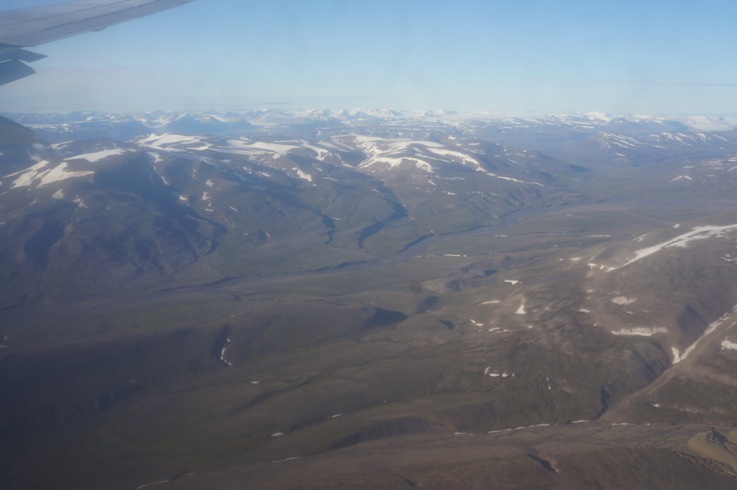
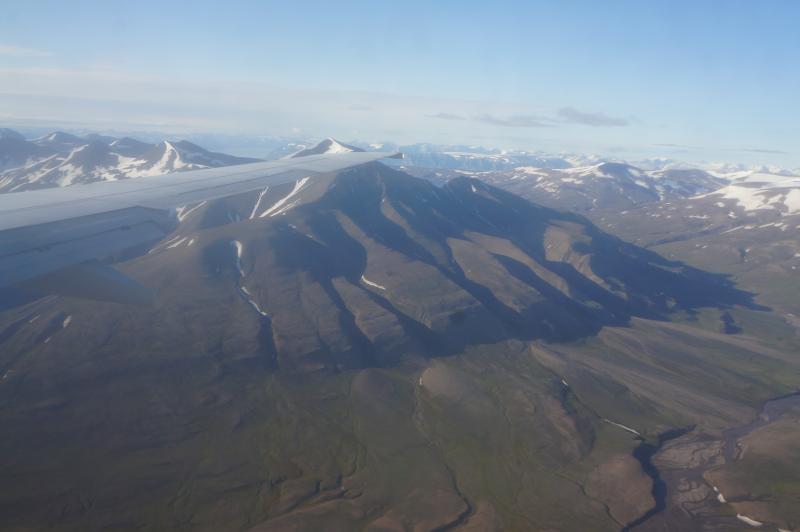
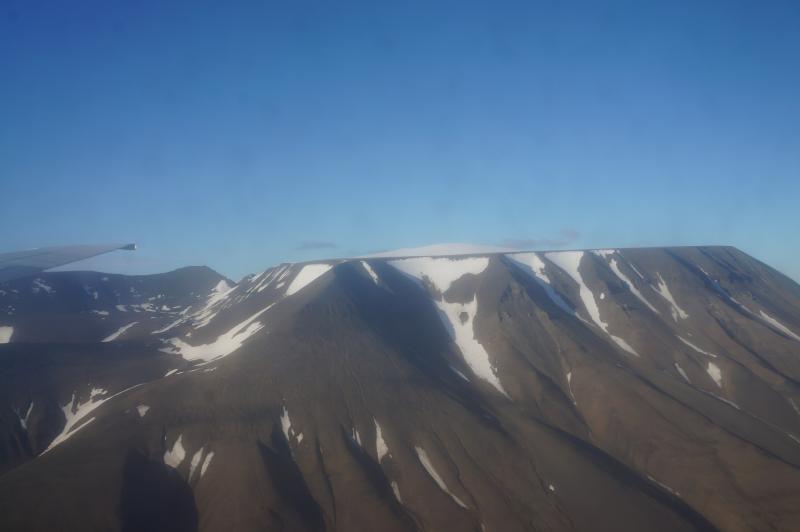
Seen from the air the day we arrived - in full sun!
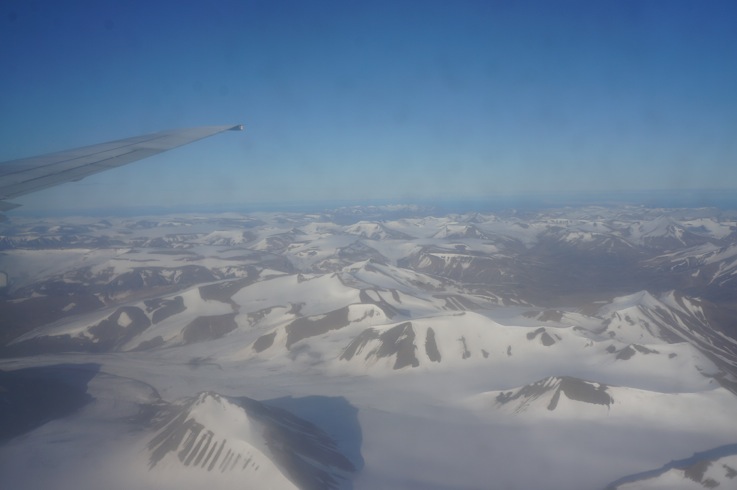
The highest mountain is 1717m/5633ft. Many are flat-topped as most of the bedrock is old sediments.
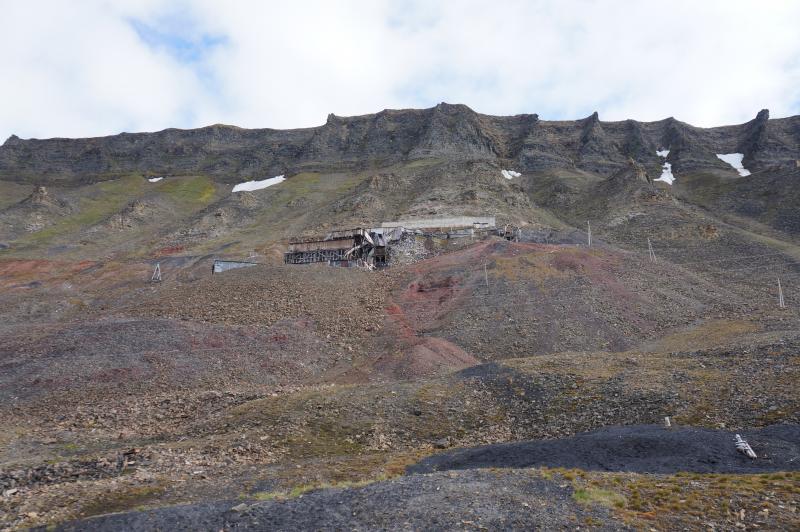
The economy was once founded on whaling and coal mining but now tourism and education/research are the most important.
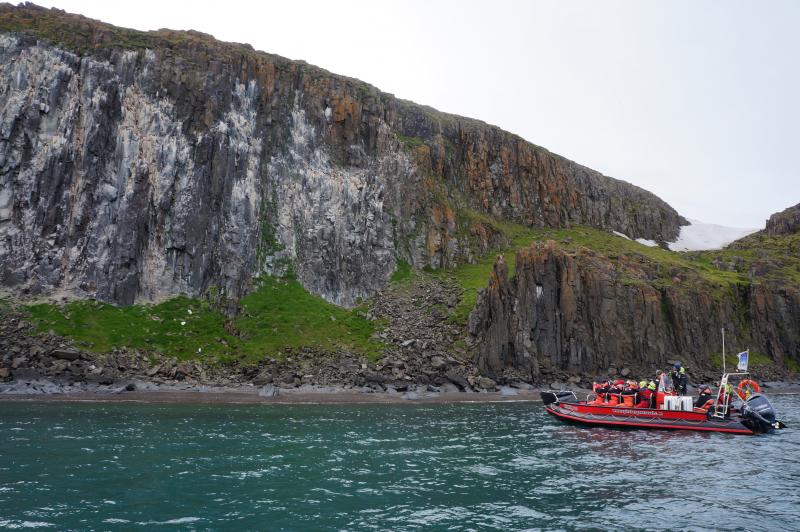
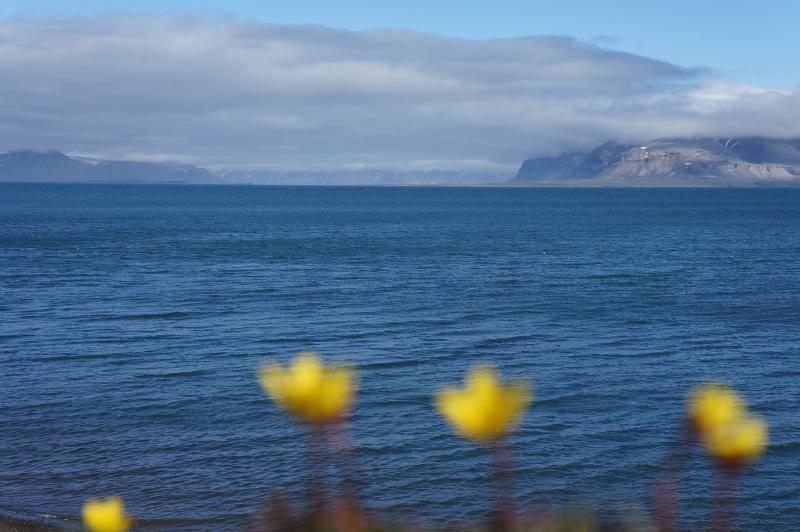
Isfjorden - very long and very broad!