What is your background in horticulture?
I have been into growing plants since I remember. I am told I followed my great-grandmother in Bluefield, West Virginia (where I was born) around her garden putting sticks in the ground when I was four years old. I remember having a small garden at a house where we rented in Yonkers, New York, when we moved there when I was five years old. So I have always gardened, but generally on a small scale while I was young since I didn’t have much land nor parents that encouraged gardening. I then went to Cornell University where I earned a bachelor’s degree in Horticulture (it was called Floriculture and Ornamental Horticulture back then) and when I came out of college I realized that there wasn’t much I could do with just a bachelor’s degree other than perhaps work in a nursery, which is not my thing. So I went back to college (again Cornell) and earned a master’s degree in Agricultural and Occupational Education and teaching certifications in biology and general science. I then ran a horticulture program at Prospect Heights High School in Brooklyn, New York, in the early 1980s.
In 1983, I took a trip to Botswana and South Africa and was completely amazed by the Cape flora. I thought to myself that I should be studying this and so I returned to Cornell to earn a PhD in horticulture. I had the intention, as did most of the graduate students in the department at the time, of becoming a professor. The harsh reality was that, by late 1990 when I finished, professorships were hard to find due to hiring adjuncts and postdocs. I ended up working at New York Botanical Garden (NYBG) as curator of the desert plant collection for six years. I liked what I did but did not like the salary, the internal politics, and the lack of job security. I learned a lot by growing a vast array of plants, and that was fun. I had a small garden at home.
I decided to return to high school teaching as I wanted job security, better pay, and a pension. So I ended up teaching biology, AP (Advanced Placement) Biology, AP Environmental Science, and other courses at Christopher Columbus High School in the Bronx, New York. While there, I would sometimes swing by NYBG on a Friday after school and help out a bit with my former plant collection and talk plants.
I then decided to apply to schools in the suburbs and got a job at Horace Greeley in Chappaqua, New York. Once there, I began to prepare a garden of a decent size right outside the door where I usually enter the school. Together with my AP students, we enlarged the garden over the first few years I was there and I grew many species and cultivars there. At one point, I made a list and there were something like over 300 different kinds of plants in the gardens. In late 2012, I moved with my wife to a larger house on 0.64 acres (0.26 hec) and began to turn the entire property into gardens. This process took three or four years to accomplish, and even now I redo some areas or change it up a bit. It is here on our property in Briarcliff Manor, New York, that I have been able to finally realize my gardening dreams. Well, most of them. I would really love to have a greenhouse one day, but with LED lights and shelves I am able to grow many indoor plants in winter especially. Our property also features large patios where potted plants can go out for the summer.
Can you describe the climate and conditions in your garden?
We are on the edge of USDA Zone 7 at this point, bordering on Zone 6. The lowest temperature I have seen was -1°F (-18°C) one night. Normally, we get a winter low of maybe three to nine degrees Fahrenheit (-16 to -12°C). Summer high temperatures usually are in the 80s (26-32°C) but can go into the 90s (32-37°C) or the 70s (21-26°C), which is the best for most of what I grow. Hot wet spells are the worst as they can cause rot on plants like delospermas. Our nights are cooler than the days and hot nights are relatively rare. Older gardeners in the area tell me that it used to be colder. The climate is temperate, with last frost usually in early to mid April, and first frost around November 10th, but it can come in late October some years.
What kinds of plants do you like to grow?
The gardens are mostly sunny, with few shrubs other than roses, and no large trees. I grow mostly herbaceous perennials, self-sowing annuals, and bulbs. There are some special areas and gardens. For example, there is a large garden dedicated to South African plants, though these plants can also be found in just about all of my gardens.
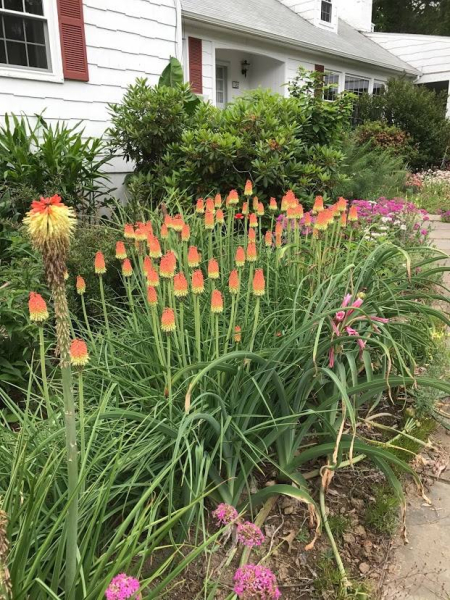
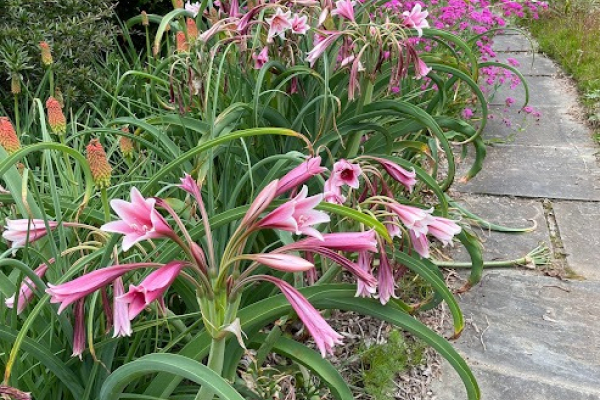
There is a small section near the house and another spot where I grow plants I collected in China or grew from collected seeds. I have several roses, both species and older types, and a few tea roses, too. Most of my peonies are grown from seed; they are mainly hybrids with a few species. There are enough kniphofia species here that there is always one or more in bloom. I grow a lot of Crinum bulbispermum as well, which are beginning to self-sow, something I thought they weren’t supposed to be able to do in our cold-winter climate.
There are a lot of unusual plants here, including a number that I have collected elsewhere, usually as seed. I also grow a lot from the seed exchanges and seed companies in South Africa, the United Kingdom, and elsewhere.
Indoors, I grow a sizable collection of winter-growing South African oxalis, pelargoniums, and geophytes. They reside under lights in the two-car garage while the cars sit outside for winter. One has to have priorities after all.
I know you for your incredible collection of plants from South Africa. How did you get interested in this group?
I became interested in South African plants when I did a summer of community gardening based from the Brooklyn Botanic Garden (BBG). There I met Betty Scholtz, who once was president of the BBG. She was from South Africa and introduced me to Veld and Flora, the magazine of the Botanical Society of South Africa. The society gave members abroad a free seed allotment at the time, which was a great incentive to join. I took my first trip to South Africa in August of 1984 and I was just stunned by the diversity of the Cape flora. Betty also set me up with some contacts in South Africa who helped me better understand the flora.
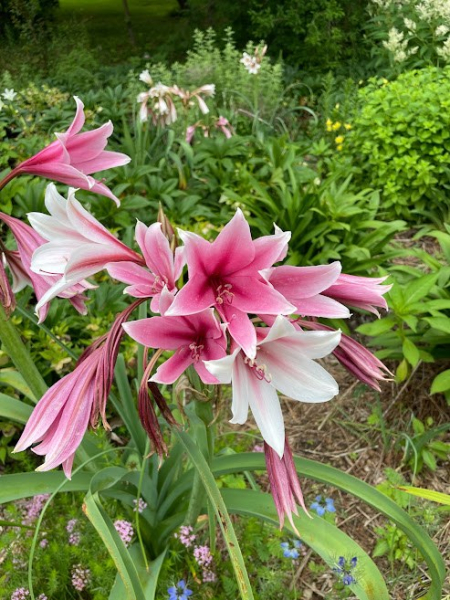
I grew a large collection of pelargonium species in the greenhouse at Cornell. I brought much of that collection with me to NYBG, where a decent portion remains to this day. While at NYBG, I experimented with growing South African flora outside near the greenhouse and in a special bed I prepared in a nearby area. I wrote about that garden for Veld and Flora some years ago. I grew South African flora in my small gardens at my parent’s house and also in the school gardens along with other plants. Though I do not upkeep the school gardens like I used to due to the demands of the home gardens and a full-time teaching job, there are still such things as Amaryllis belladonna and Pelargonium luridum that come up every year by the wall of the building that creates a warmer microclimate for them.
Here in the home gardens, I will protect some of the South African and other zone-pushing plants with wood chips that I put on them in December or, at the latest, early January. This allows me to grow things like gerberas as perennials here. In spring, I move the mulch aside and use it in paths or just let it rot to improve the soil.
Can you recommend some off-the-beaten-track South African plants you think NARGS members should try growing?
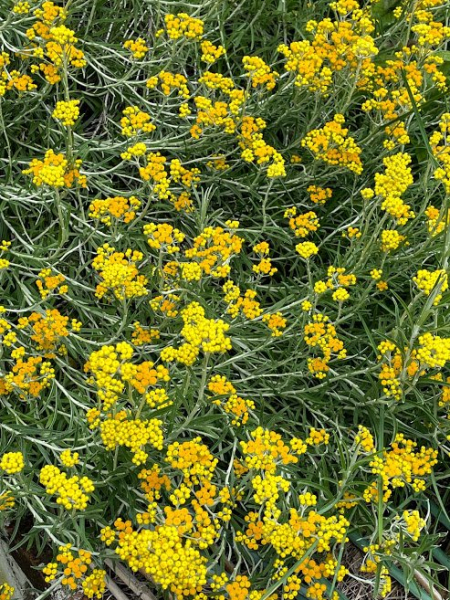
Helichrysum splendidum is a vigorous plant with silvery fragrant foliage that repels plant-eating mammalian vermin. In hard winters here it will often die back to near the base but regrows fast. It has few flowers after hard winters, but in milder winters there is little to no dieback and it can get huge and have lots of small yellow strawflowers in yarrow-like clusters in June.
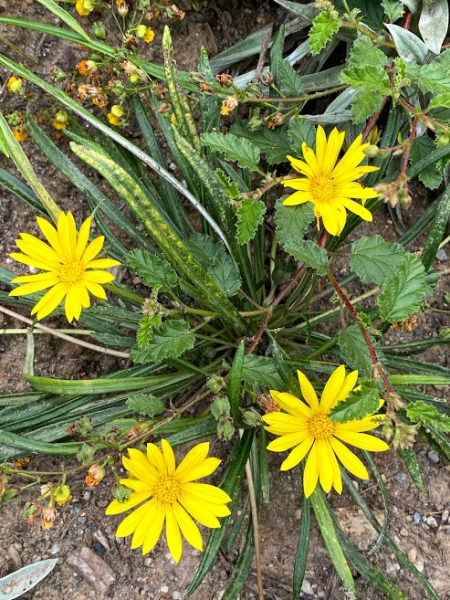
Haplocarpha scaposa has rosettes of attractive foliage from which emerge long stems with big bright yellow daisies, sort of like a gerbera but with better foliage. It also blooms off and on all growing season and would be reliable in Zone 7 and probably into Zone 6 with a little winter protection.
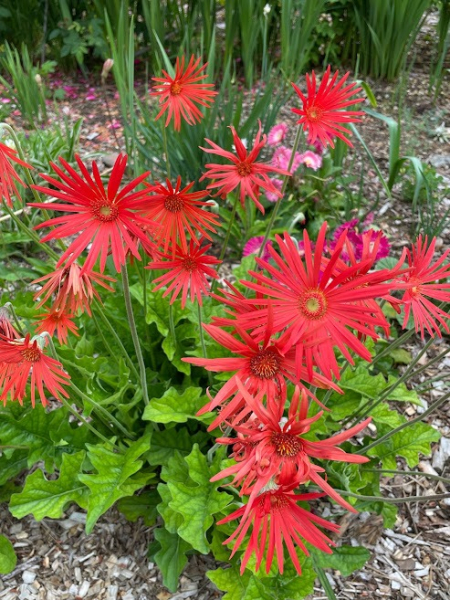
Gerbera jamesonii, the ancestor of the cultivated gerbera, is a beautiful red daisy that looks nicer and more wildflower-like than the commonly cultivated sorts. It mass blooms in June and a few flowers appear sporadically afterward. A thick winter mulch of wood chips, maybe six inches (15 cm) or so deep, has kept it solidly perennial here for several years.
Kniphofia caulescens is the toughest and hardiest of the genus. The flowers vary from red to yellow, most often coming in a bicolored form. It blooms once in June and will self-sow here. No winter here has killed it so far, though for optimal appearance I cut the off old, tattered, winter-damaged foliage in the spring.
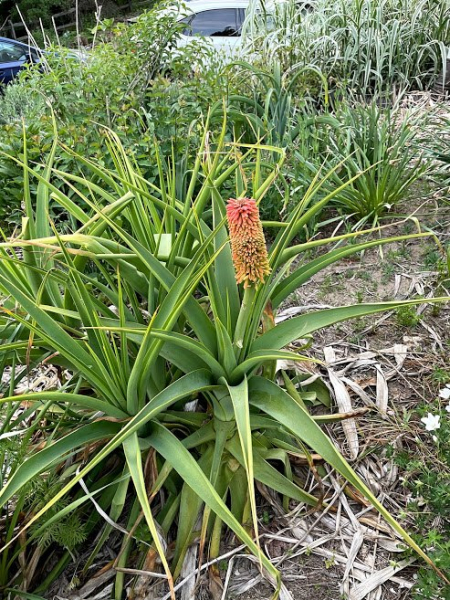
Kniphofia northiae has some of the least attractive flowers of the genus and is not a generous bloomer, but its foliage totally rocks. It looks like a giant, wide-leaved tillandsia.
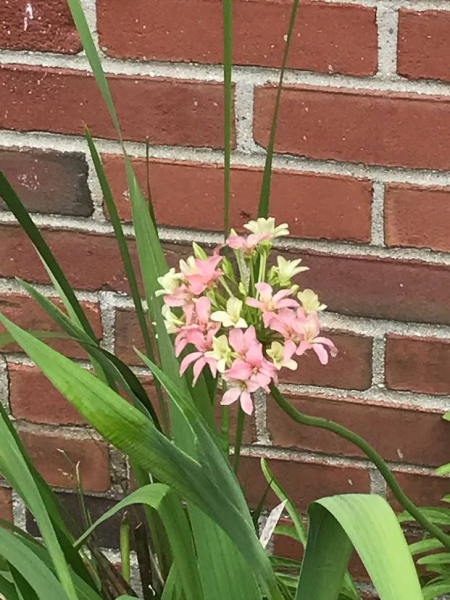
Crinum bulbispermum is a must-have. It is slow from seed and isn’t a fast offsetter, but it is very hardy and requires no protection here. It produces lots of blooms in June and sporadic ones afterward. I have so much of it here that there is almost always one in flower somewhere in the garden, even after the main bloom season. The foliage is nice too. All it lacks is the sweet fragrance of its more tender relatives.
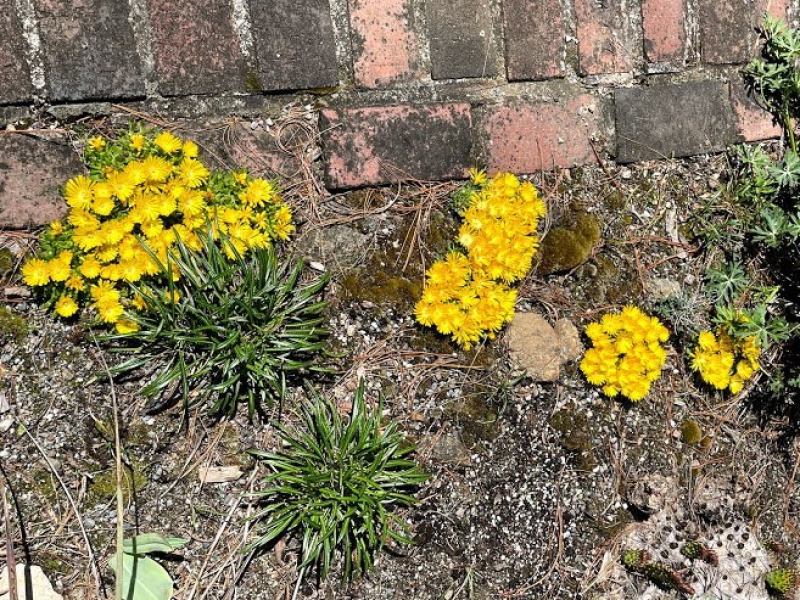
Delospermas come in many forms, but I’d suggest Delospema congestum (it goes by other names, too) as the hardiest. It has yellow flowers with white centers in early spring. Some of the magenta/hot pink sorts (e.g., D. ashtonii and D. cooperii) can flower for a very long time and are vigorous growers in sunny well-drained areas.
Galtonia candicans (Syn. Ornithogalum candicans) is easy to find and is reliably hardy here. It makes nice spires of white flowers and the seed is easy to germinate to grow more.
Agapanthus ‘Old Wayside Clone’ is a form that Ellen Hornig sold from her former Seneca Hills nursery. It is a dwarf blue one and may be a form of A. campanulatus. It is hardy here without protection and would be the best choice in the genus for a rock garden.
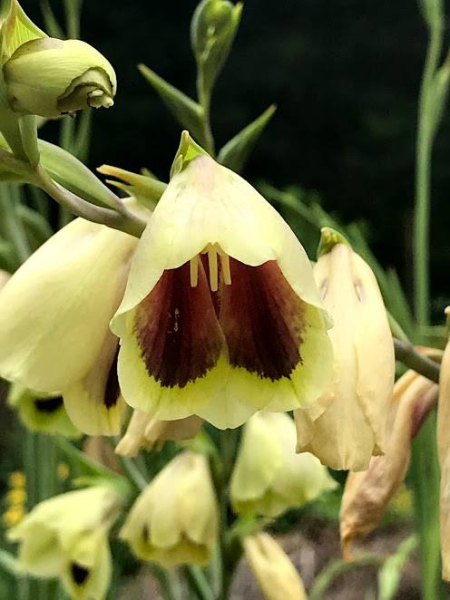
Some forms of Gladiolus papilio have nice markings in the flowers and are very hardy. They can form a thick stand rather fast. In nature, it grows in wet areas but will grow fine in regular garden soil.
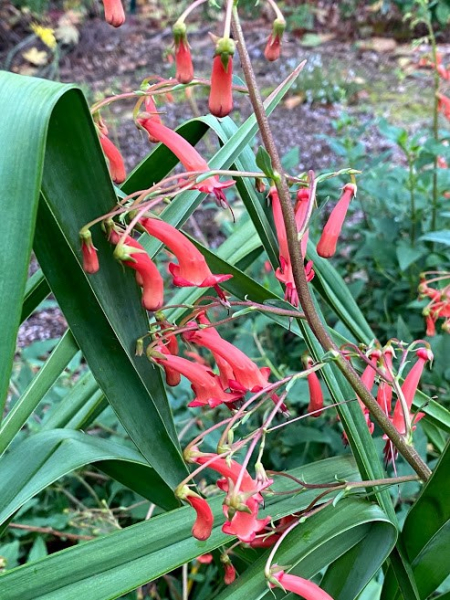
Phygelius is a reliable genus here, it is composed of two species that are hard to distinguish and which very well could be one in my opinion. Several cultivars exist in reds, yellows, pinkish, and salmon colors. Even when they die back to the ground they are quick to sprout again and flower. They can form spreading colonies rather fast in areas they like.
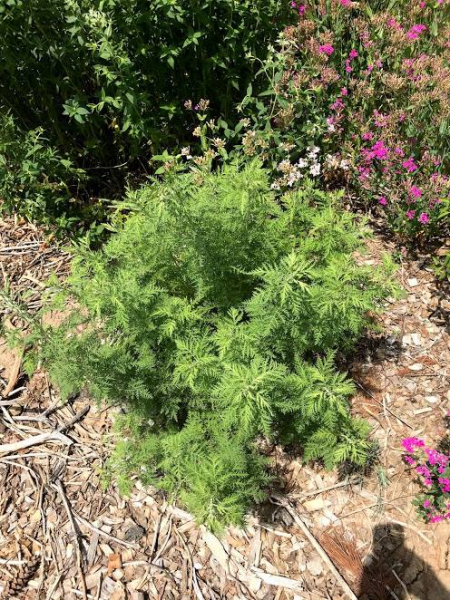
Artemesia afra has pleasing foliage, both aromatically and visually. It is hardy here and even reseeds a bit. It can benefit from a partial cutback in spring to keep it from getting too tall.
Gazanias are lovely things but so far only Gazania linearis is hardy, and more so some years than others. Seeds and plants are readily available here, and it will bloom well if treated as an annual. Flowers are yellow, some having nice black central rings or spots at the petal base.
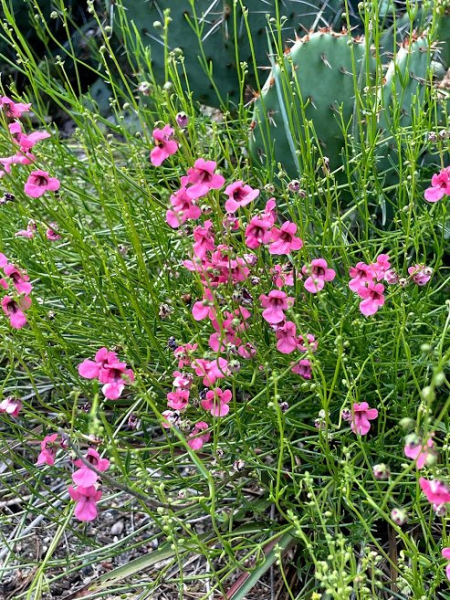
Diascia integerrima is a nice, hardy diascia for a rock garden. There is a cultivar in the US, ‘Coral Canyon’, that I have killed a couple of times but seed I got from Silverhill Seeds produced plants that have thrived for several years.
Wahlenbergia undulata is the South African answer to campanula. It has spreading roots that produce masses of blue upturned flowers all summer long. It grows easily from seed or division and is hardy here. It can vary a bit in different localities in South Africa from what appear to be more robust to more gracile forms.
Know a rock gardener you’d like to see interviewed in the Quarterly? Let me know via the Contact Us page on NARGS.org